AI agents are quickly moving from experimental side projects to mission-critical software workers that call models, retrieve data, execute workflows, and make decisions across business systems. As usage grows, so does the need to monitor token consumption, control spend, enforce governance policies, and understand the behavior of each agent in production. The best AI agent platforms now combine observability, evaluation, policy controls, cost analytics, and workflow management into a single operating layer for teams building with large language models.
TLDR: The top AI agent platforms for token monitoring, governance, and cost optimization help teams track model usage, detect waste, enforce guardrails, and improve reliability. Tools such as LangSmith, Helicone, Arize AI, Portkey, Humanloop, Galileo, Weights & Biases, and OpenAI’s platform features provide different strengths depending on whether your priority is engineering observability, budget control, evaluation, or policy management. The right choice depends on your agent architecture, model mix, compliance needs, and how deeply you need to inspect prompts, traces, and costs.
Why Token Monitoring Matters for AI Agents
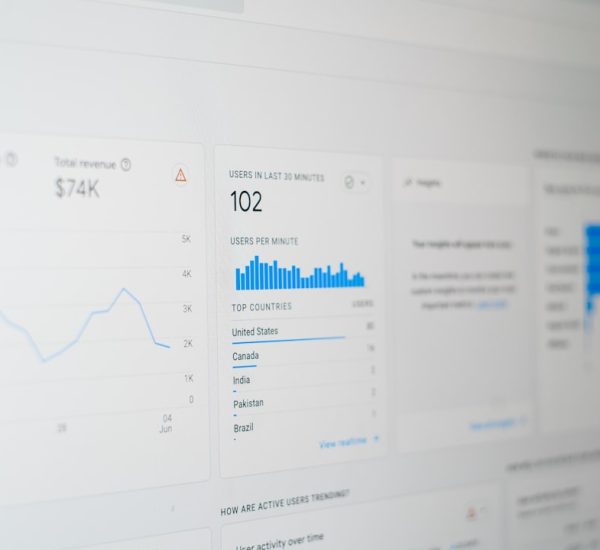
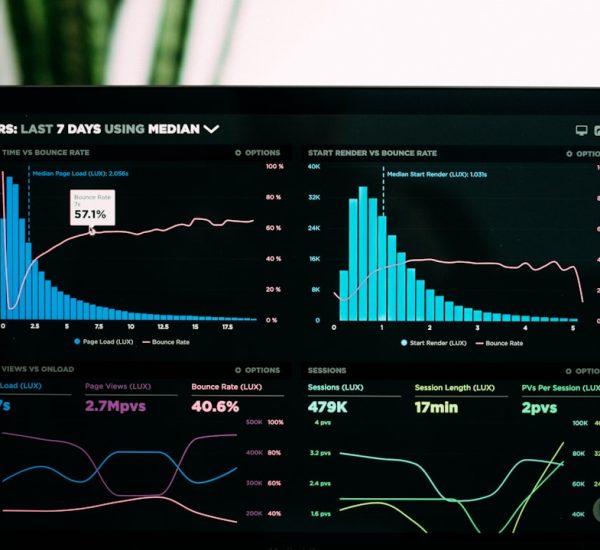
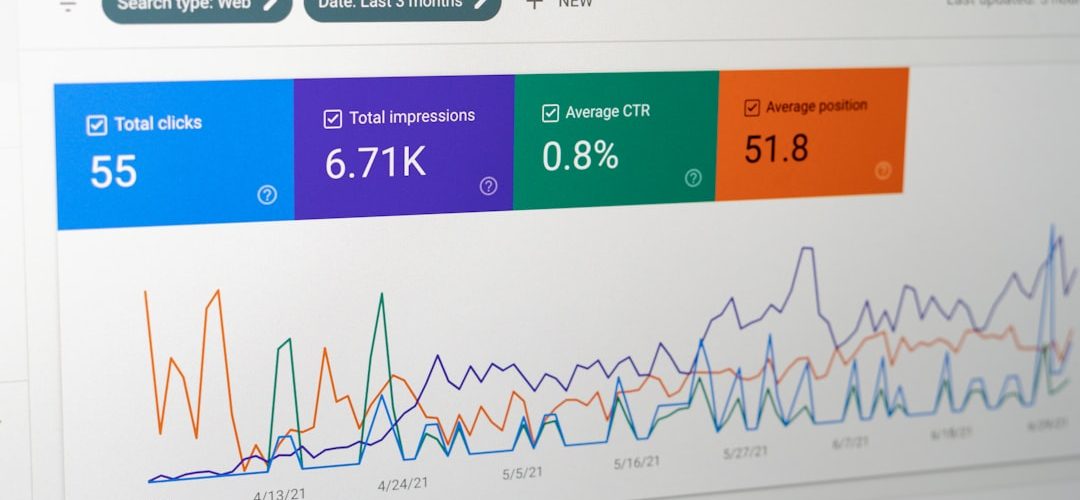
Unlike a simple chatbot, an AI agent may perform multiple reasoning steps, call several tools, retry failed tasks, search a vector database, summarize results, and then generate a final response. Every step can consume input and output tokens. When these runs happen at scale, small inefficiencies can turn into large bills. Token monitoring gives teams visibility into what each agent is doing, which prompts are expensive, which users or workflows drive spend, and where optimization can make the biggest difference.
Governance is equally important. AI agents may access private documents, customer records, or business applications. A strong platform should help enforce rules around data handling, model selection, prompt changes, access permissions, logging, and human review. Cost optimization without governance can create risk; governance without cost visibility can become slow and expensive. The best platforms bring both together.
What to Look for in an AI Agent Platform
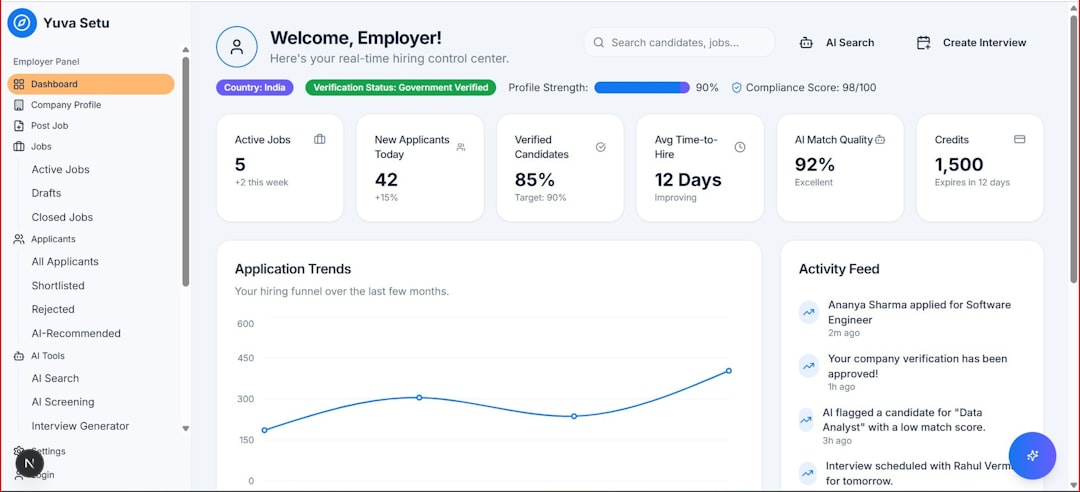
Before comparing platforms, it helps to define the core capabilities that matter most. A mature AI operations stack should include:
- Token and cost tracking: Real-time visibility into prompt tokens, completion tokens, model costs, user-level spend, and workflow-level spend.
- Tracing and observability: Detailed records of agent steps, tool calls, latency, errors, retries, and model responses.
- Governance controls: Role-based access, audit logs, prompt versioning, approval workflows, and data retention policies.
- Evaluation and testing: Automated checks for quality, hallucination, safety, relevance, and regression after prompt or model changes.
- Model routing: The ability to choose cheaper or faster models for certain tasks while reserving premium models for complex reasoning.
- Alerting and budgets: Notifications when cost, latency, failure rate, or unsafe output crosses a defined threshold.
1. LangSmith
LangSmith, from the LangChain ecosystem, is one of the most widely used platforms for debugging, tracing, evaluating, and monitoring LLM applications and agents. It is especially valuable for teams already building with LangChain or LangGraph, although it can also be used in broader architectures.
Its biggest strength is deep trace visibility. Developers can inspect every step in an agent workflow, including prompts, intermediate decisions, retrieved documents, tool calls, outputs, latency, and errors. This makes it easier to identify runaway loops, overly verbose prompts, unnecessary retrieval calls, or expensive model choices.
For governance, LangSmith supports dataset management, prompt versioning, experiments, and evaluations. Teams can compare model outputs before shipping changes and assess whether a cheaper model performs well enough for a given workflow. This makes it a strong choice for organizations that want practical engineering control over agent quality and operating cost.
2. Helicone
Helicone is a popular observability and cost monitoring platform for LLM applications. It acts as a proxy or integration layer that captures requests and responses across providers. If your main concern is understanding token usage, latency, errors, and cost by user, model, endpoint, or organization, Helicone is highly focused and approachable.
Teams use Helicone to build dashboards showing which customers are driving AI spend, where prompts are getting too long, and which models produce the best balance of cost and performance. It also supports caching, rate limits, custom properties, and alerts, making it useful for SaaS companies that need to manage AI features across many users.
Best for: teams that want fast deployment of LLM observability, usage analytics, and cost controls without building their own monitoring infrastructure.
3. Arize AI
Arize AI is an observability platform that has expanded deeply into LLM and agent monitoring. It is particularly strong for teams that care about production performance, evaluation, troubleshooting, and quality drift over time. Its LLM observability features help track traces, embeddings, prompts, responses, hallucinations, relevance, and user feedback.
Arize is a compelling option for enterprises because it combines classic machine learning observability with modern generative AI monitoring. That is useful when agents are part of a broader AI ecosystem, such as recommendation systems, fraud detection, search, or personalization engines.
From a cost optimization perspective, Arize helps teams connect quality and performance signals to usage patterns. Rather than simply asking, “Which model is cheapest?” teams can ask, “Which model delivers acceptable quality at the lowest operational cost?” That distinction is crucial for production agents.

4. Portkey
Portkey offers an AI gateway designed for observability, governance, routing, retries, caching, and cost optimization across multiple model providers. It is useful for teams that do not want to be locked into a single LLM vendor and need a centralized control plane for all AI traffic.
One of Portkey’s major advantages is model routing. You can route different requests to different providers based on cost, latency, fallback requirements, or task complexity. For example, a support classification task might use a smaller inexpensive model, while a legal document analysis task routes to a more capable model. This kind of routing can reduce cost substantially without reducing user experience.
Portkey also supports logs, analytics, prompt management, caching, and guardrails. For governance, it helps centralize policies so teams can manage provider usage, API keys, access controls, and request behavior in one place.
5. Humanloop
Humanloop focuses on prompt management, evaluation, and human-in-the-loop workflows for LLM applications. It is especially helpful for organizations where product managers, domain experts, and engineers need to collaborate on prompts, test cases, approvals, and model behavior.
For governance, Humanloop stands out because it treats prompts and evaluations as managed assets. Teams can version prompts, review changes, test outputs, and create structured feedback loops. This reduces the risk of untracked prompt edits causing unexpected cost increases or quality regressions.
Humanloop is also helpful for optimizing token usage because it encourages systematic experimentation. Instead of guessing whether a shorter prompt, different model, or revised instruction will work, teams can run evaluations and compare results. Over time, this creates a disciplined process for improving both quality and efficiency.
6. Galileo
Galileo provides evaluation and observability tooling for generative AI applications, with strong emphasis on detecting hallucinations, poor retrieval quality, prompt issues, and response problems. It is a good fit for teams building RAG systems and agents that depend heavily on retrieved context.
Token costs often balloon in retrieval-augmented systems because agents pass too many documents or overly large chunks into the model. Galileo can help teams understand whether retrieved context is useful, redundant, or irrelevant. By improving retrieval quality, teams can reduce token waste while improving answer accuracy.
Galileo’s evaluation workflows also support governance by making quality measurable. Instead of relying only on manual inspection, teams can establish repeatable checks that flag risky or low-quality outputs before they affect users.
7. Weights & Biases
Weights & Biases, often known as W&B, is well established in machine learning experiment tracking and has expanded into LLM application development and evaluation. For AI teams that already use W&B for model development, adding LLM and agent monitoring can create a unified workflow from experimentation to production.
W&B is useful for tracking prompt experiments, comparing model outputs, managing datasets, recording evaluation results, and collaborating across technical teams. It may not be the simplest option if all you need is token billing analytics, but it is powerful for organizations that treat AI agents as part of a larger ML lifecycle.
For cost optimization, W&B helps teams compare experiments in a structured way. You can evaluate whether a smaller model, compressed prompt, or alternative retrieval strategy produces similar performance with lower cost.
8. OpenAI Platform Features
For teams building primarily on OpenAI models, the native platform features can provide a useful foundation for monitoring and governance. Usage dashboards, API key management, project-level controls, rate limits, usage limits, and logging options help teams understand consumption and prevent runaway spend.
The strongest reason to use native provider tooling is simplicity. You get direct visibility into model usage and spend without adding a third-party layer. However, if your agents use multiple providers, complex tool chains, or custom evaluation pipelines, you may eventually need a dedicated observability or gateway platform on top.
Best for: teams that are early in production, mostly use one provider, and want basic cost visibility and access management before adopting a broader AI operations stack.

How These Platforms Reduce AI Costs
Cost optimization is not just about choosing the cheapest model. In many cases, savings come from improving architecture and behavior. Leading platforms help teams reduce cost through several practical techniques:
- Prompt compression: Shortening system instructions and removing repeated context can reduce input tokens.
- Better retrieval: Passing fewer, more relevant documents prevents context windows from becoming unnecessarily large.
- Caching: Reusing responses for repeated or similar requests avoids paying for duplicate model calls.
- Model tiering: Simple requests can go to smaller models, while complex tasks use premium models.
- Retry control: Monitoring failed calls and loops prevents agents from repeatedly spending tokens on broken workflows.
- Usage attribution: Mapping cost to users, products, or departments makes budgeting more accountable.
Governance: The Layer That Keeps Agents Safe
As agents become more autonomous, governance becomes a business requirement rather than a nice-to-have feature. A good governance layer answers important questions: Who changed this prompt? Which model handled this customer request? Did the agent expose sensitive information? Was a human approval required? Can we reproduce what happened during a specific run?
Platforms with strong governance provide audit logs, access controls, prompt versioning, evaluation gates, and policy enforcement. For regulated industries such as healthcare, finance, insurance, and legal services, these features are essential. Even in less regulated environments, governance helps prevent brand damage, unexpected costs, and unreliable user experiences.
Choosing the Right Platform
The best platform depends on your team’s maturity and priorities. If you are building with LangChain or LangGraph, LangSmith is a natural starting point. If you need clean cost dashboards and request analytics, Helicone is lightweight and effective. If you need enterprise-grade observability and quality monitoring, Arize AI is a strong contender. If multi-provider routing and centralized AI gateway controls matter most, Portkey deserves serious consideration.
For teams that care deeply about collaborative prompt governance, Humanloop is well suited. For RAG-heavy systems, Galileo can help improve both quality and token efficiency. If your organization already uses machine learning experiment platforms, Weights & Biases may integrate naturally into your process. And if your setup is simple and provider-specific, native platform tools may be enough at the beginning.
Final Thoughts
AI agents can create enormous value, but they also introduce new operational challenges. Without monitoring, an agent can silently waste tokens, call expensive models unnecessarily, or produce unreliable outputs. Without governance, teams may struggle to control prompt changes, data exposure, and policy compliance. The leading AI agent platforms solve these problems by making agent behavior visible, measurable, and manageable.
The smartest approach is to treat token monitoring, governance, and cost optimization as connected disciplines. Start with visibility, add evaluation, enforce policy, and continuously optimize based on real usage. As AI agents become more central to business operations, the teams that invest in strong operational platforms will be better positioned to scale safely, efficiently, and confidently.