Revenue cycle management is where clinical care meets cash flow. For healthcare providers, the right RCM platform can reduce claim denials, speed up reimbursement, improve patient collections, and give leadership a clearer view of financial performance. Below are eight strong revenue cycle management software platforms worth considering, from enterprise hospital systems to agile tools for independent practices.
TLDR: The best RCM software depends on provider size, specialty mix, payer complexity, and how much automation you need. For example, a 12-provider orthopedic group that reduces claim denials from 9% to 5% could recover tens of thousands of dollars per month in delayed or lost revenue. Platforms like Epic and Oracle Health are strong for large health systems, while athenaCollector, AdvancedMD, and Tebra are often better fits for ambulatory practices. Look for tools that improve eligibility checks, coding accuracy, denial management, patient billing, and reporting.
What to Look for in RCM Software
A good RCM platform should support the entire financial journey: scheduling, eligibility verification, prior authorization, charge capture, coding, claims submission, payment posting, denial management, patient statements, and analytics. The strongest systems also use automation and predictive insights to identify problems before they become expensive delays.
- Claim accuracy: Built-in scrubbing and payer rule checks help reduce denials.
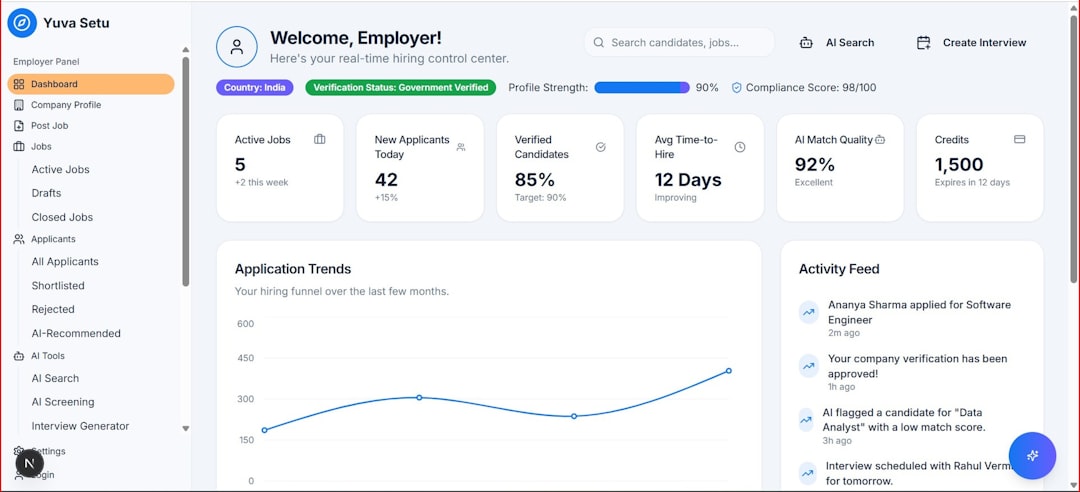
- Workflow visibility: Dashboards should show aging claims, underpayments, and bottlenecks.
- Patient payment tools: Online portals, estimates, and payment plans improve collections.
- Integration: The platform should connect smoothly with EHR, scheduling, accounting, and clearinghouse systems.
- Scalability: A small practice and a multi-hospital network have very different needs.
1. Epic Resolute
Best for: Large hospitals, academic medical centers, and integrated delivery networks.
Epic Resolute is one of the most widely recognized RCM solutions in enterprise healthcare. It works within the broader Epic ecosystem, making it especially valuable for organizations already using Epic’s EHR, scheduling, and patient engagement tools. Its biggest strength is the ability to connect clinical and financial data in one environment.
Epic Resolute supports hospital billing, professional billing, claims management, payment posting, and patient accounting. It is powerful, deeply configurable, and built for complex organizations with multiple departments and payer contracts. However, implementation can be expensive and time intensive, so it is typically not the best choice for smaller practices.
2. Oracle Health RevElate
Best for: Health systems that need enterprise-scale billing and strong EHR connectivity.
Oracle Health RevElate, developed from Cerner’s revenue cycle technology, is designed to modernize billing workflows across hospitals and large provider networks. It focuses on simplifying registration, charge capture, claims, contract management, and patient accounting.
One advantage is its alignment with Oracle Health’s clinical systems, which can help reduce gaps between care documentation and billing. Organizations with complex payer relationships may appreciate its contract management and reporting capabilities. Like Epic, it is best suited for larger environments with the internal resources to manage implementation and optimization.
3. athenaCollector
Best for: Ambulatory practices that want cloud-based RCM with performance benchmarking.
athenaCollector is part of athenahealth’s cloud-based suite and is popular among physician groups, specialty practices, and outpatient organizations. Its major appeal is the combination of billing software, clearinghouse functionality, payer rule updates, and network-wide performance data.
The platform helps practices manage eligibility checks, claims submission, denial follow-up, patient billing, and reporting. Because athenahealth works with many practices across the country, it can use payer behavior patterns to improve claims workflows. This makes it a strong choice for groups that want a software-enabled service model rather than a purely internal billing operation.
4. Waystar
Best for: Providers that want advanced automation across claims, denials, and patient payments.
Waystar is a robust RCM platform used by hospitals, health systems, specialty groups, and billing companies. It offers a broad set of tools for claim management, eligibility verification, prior authorization, denial prevention, underpayment recovery, and patient financial engagement.
Waystar stands out for automation. Its technology can help identify claim errors, prioritize denial work queues, and simplify patient payment experiences. For organizations struggling with manual billing tasks, Waystar can be especially useful because it adds intelligence to repetitive revenue cycle processes.

5. R1 RCM
Best for: Hospitals and large medical groups looking for an outsourced or technology-enabled RCM partner.
R1 RCM is more than a software vendor; it provides end-to-end revenue cycle services supported by technology, analytics, and operational teams. This makes it attractive for organizations that want to outsource major parts of the revenue cycle or transform an underperforming billing department.
R1 supports front-end processes such as scheduling, eligibility, and prior authorization, as well as back-end functions like claims, denials, payment posting, and collections. Its strength is operational scale. For providers facing staffing shortages, rising denial rates, or inconsistent workflows across locations, R1 can provide both platform capability and human expertise.
6. eClinicalWorks RCM
Best for: Practices already using eClinicalWorks EHR.
eClinicalWorks offers revenue cycle tools that integrate with its electronic health record and practice management system. For small to midsize practices, this can reduce friction because clinical documentation, scheduling, billing, and reporting live in a familiar environment.
The platform supports claims processing, denial management, reporting, patient statements, and payment collection. eClinicalWorks also offers RCM services for practices that want help with day-to-day billing tasks. It is particularly useful for primary care, urgent care, and specialty practices that want a single vendor for EHR and billing operations.
7. AdvancedMD
Best for: Independent practices and specialty groups that want flexible practice management and billing tools.
AdvancedMD is a cloud-based platform offering practice management, EHR, patient engagement, and medical billing features. Its RCM strengths include claim scrubbing, electronic remittance, denial tracking, payment posting, and customizable financial reports.
Many practices choose AdvancedMD because it is flexible and relatively approachable compared with enterprise hospital systems. It can support in-house billing teams or outsourced billing arrangements. Specialty practices may also value its scheduling, templates, and reporting options, which can be adapted to different workflows.
8. Tebra
Best for: Small practices, independent providers, and growing outpatient clinics.
Tebra, formed through the combination of Kareo and PatientPop, offers tools for practice growth, billing, patient communication, and online reputation management. Its RCM capabilities are geared toward independent practices that need simple, practical billing workflows without enterprise complexity.
The platform includes claims management, insurance verification, patient statements, payment collection, and reporting. It is not as deep as Epic or Oracle Health for hospital billing, but it can be a strong fit for providers that need affordability, usability, and patient-facing tools in one package.

How to Choose the Right Platform
The best RCM platform is not always the one with the longest feature list. It is the one that fits your organization’s size, workflows, staffing model, payer mix, and budget. A large health system may need enterprise contract modeling and hospital billing, while a five-provider dermatology practice may need faster claims, easier patient payments, and clean monthly reports.
Before selecting a platform, ask vendors for specific performance examples. For instance, what denial reduction should you reasonably expect in the first year? How quickly can the system identify missing documentation? What percentage of patient balances are typically collected through digital payment tools? These questions reveal whether the platform can produce measurable results, not just attractive demos.
Final Thoughts
Revenue cycle management is no longer just a back-office function. It directly affects patient experience, provider satisfaction, and organizational stability. Platforms such as Epic Resolute, Oracle Health RevElate, athenaCollector, Waystar, R1 RCM, eClinicalWorks RCM, AdvancedMD, and Tebra each serve different segments of the healthcare market.
For the best results, compare platforms based on real workflow needs, not brand recognition alone. A well-chosen RCM system can turn billing from a source of frustration into a strategic advantage, helping providers get paid faster while giving patients a clearer, more modern financial experience.