
In an economy increasingly shaped by digital transactions, cloud platforms, automated workflows, and real-time decision-making, the ability to bring fragmented information together has become a strategic necessity. Aggreg8 Dave Watkin is closely associated with this shift: a focus on making data aggregation more practical, reliable, and useful for organizations that need clarity from complexity. Rather than treating data as a passive by-product of business activity, the Aggreg8 approach reflects a more mature view: information should be organized, governed, and transformed into insight that supports measurable action.
TLDR: Aggreg8 Dave Watkin represents a serious and forward-looking approach to data aggregation in the digital age. The emphasis is on connecting fragmented data sources, improving trust in information, and helping organizations make better decisions. By combining technical capability with governance, usability, and strategic thinking, Aggreg8 highlights why data aggregation is now essential infrastructure for modern business.
A Serious Response to a Growing Data Problem
Most organizations today do not suffer from a lack of data. They suffer from too much disconnected data. Customer records may sit in one platform, financial data in another, operational metrics in spreadsheets, and marketing performance in dashboards that do not communicate with each other. This fragmentation creates delays, inconsistencies, duplicated work, and uncertainty.
The value of data aggregation lies in solving this problem. It is the disciplined process of collecting information from multiple sources, standardizing it, and presenting it in a usable form. When done well, it allows leaders to see patterns, compare performance, detect risks, and identify opportunities with greater confidence.
Dave Watkin’s association with Aggreg8 is best understood within this broader business challenge. The focus is not merely technical integration for its own sake. It is about creating a dependable information layer that supports better judgment. In serious organizations, data aggregation is no longer a convenience; it is becoming a foundation for competitiveness, compliance, and resilience.
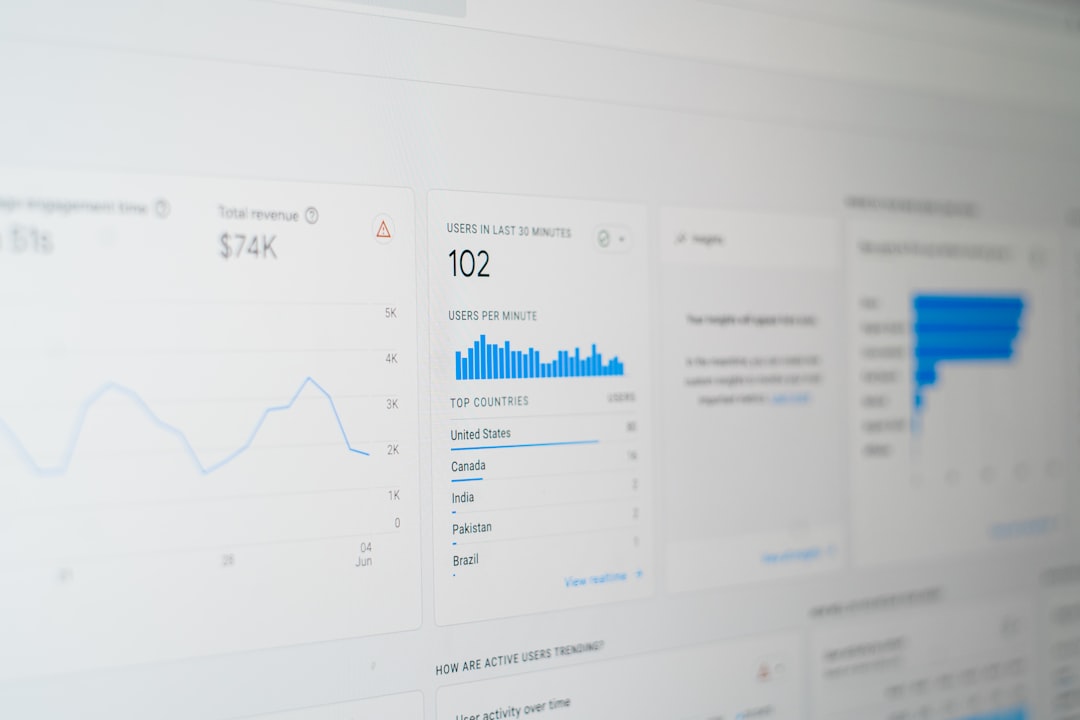
Why Aggregation Matters in the Digital Age
The digital age has changed the speed at which organizations must operate. Decisions that once took weeks are now expected in days, hours, or even minutes. Supply chains shift quickly. Customer behavior changes rapidly. Markets react instantly to new information. In this environment, delayed or incomplete data can become a direct business risk.
Aggreg8’s relevance lies in addressing several core needs:
- Unified visibility: Bringing data from multiple systems into one coherent view.
- Operational efficiency: Reducing manual reporting, repeated data entry, and spreadsheet dependency.
- More reliable decisions: Helping teams work from consistent, validated information.
- Improved accountability: Making it easier to trace data sources and understand performance.
- Scalability: Supporting growth without allowing information systems to become chaotic.
These are not abstract advantages. They affect daily decision-making across finance, sales, logistics, healthcare, professional services, retail, and technology. A company that can understand its data faster can respond faster. A company that trusts its data can take more confident action.
The Leadership Dimension: Dave Watkin and Strategic Clarity
Technology alone does not create transformation. Platforms can collect data, but people define what matters, where risk exists, and how information should be used. This is where leadership becomes central. The name Dave Watkin, in relation to Aggreg8, suggests a leadership narrative built around practical innovation rather than hype.
In the data industry, credibility depends on more than ambitious language. It depends on whether solutions address real constraints: legacy systems, poor data quality, security concerns, budget limitations, and user adoption. A serious aggregation strategy must recognize that organizations are complex. It must be flexible enough to connect with existing systems while disciplined enough to prevent confusion from multiplying.
This is one of the defining issues for modern data leaders. They must balance innovation with control. They must encourage broader access to information while protecting sensitive records. They must deliver speed without sacrificing accuracy. Aggreg8’s positioning can be viewed through this lens: a practical attempt to make aggregated data not only available, but trustworthy.
Trust as the Core of Data Aggregation
Data aggregation succeeds only when users trust the output. If teams believe dashboards are inaccurate, incomplete, or poorly maintained, they will quickly return to informal workarounds. Trust requires strong foundations, including clear data definitions, source verification, access controls, audit trails, and consistent update processes.
Trustworthy aggregation should answer important questions:
- Where did the data come from?
- When was it last updated?
- Who has permission to view or change it?
- How are errors detected and corrected?
- Are calculations and definitions consistent across departments?
These questions are especially important as organizations increase their reliance on automation and artificial intelligence. AI systems are only as sound as the data they use. If aggregated data is poorly structured or unreliable, automated outputs can become misleading. In this sense, data aggregation is not only a reporting function. It is part of the infrastructure required for responsible digital transformation.

From Raw Information to Business Intelligence
The practical value of Aggreg8’s model is most visible in the journey from raw information to business intelligence. Raw data usually arrives in inconsistent formats. It may include duplicates, missing fields, naming conflicts, or incompatible structures. Aggregation must therefore involve cleaning, mapping, organizing, and contextualizing information before it can be useful.
Once this process is handled effectively, organizations can move beyond basic reporting. They can begin to analyze trends, compare segments, forecast demand, measure performance, and identify anomalies. This is where aggregation becomes a strategic asset.
For example, a retail business might combine point-of-sale data, website analytics, inventory records, and customer feedback. A financial services firm might unify transaction data, client profiles, compliance reports, and risk indicators. A healthcare organization might connect scheduling, patient outcomes, resource usage, and administrative records. In each case, the goal is the same: to replace fragmented visibility with a clearer operational picture.
The Human Side of Data Adoption
One of the most underestimated aspects of data aggregation is user adoption. Even the most capable platform will fail if people do not understand it, trust it, or see its relevance to their work. Effective aggregation therefore requires attention to usability, training, communication, and change management.
This is where a serious approach differs from a purely technical one. Dashboards must be readable. Reports must answer meaningful questions. Data access must match real job responsibilities. Leaders must explain why new systems are being introduced and how they improve existing workflows.
Aggreg8’s significance can be understood as part of this broader movement toward making data more accessible without oversimplifying it. The challenge is to give decision-makers useful information while preserving the detail and integrity required for professional analysis. That balance is central to modern business intelligence.
Compliance, Privacy, and Responsible Data Use
As more data is collected and combined, questions of privacy and compliance become more important. Aggregation can create powerful insights, but it can also create risk if sensitive information is mishandled. Responsible data aggregation must therefore include strong governance from the beginning, not as an afterthought.
Organizations need clear policies for data retention, user permissions, regulatory obligations, and ethical use. Depending on the industry and location, this may involve privacy laws, financial regulations, healthcare standards, contractual obligations, and internal security rules. A mature aggregation strategy respects these boundaries.
Responsible innovation means recognizing that more data is not always better. The right data, collected for legitimate purposes, protected appropriately, and used transparently, is what creates lasting value. This principle is likely to become even more important as regulators, customers, and business partners place greater scrutiny on digital practices.
The Competitive Advantage of Organized Data
Organizations that manage aggregation well often gain a quiet but significant competitive advantage. They can prepare reports faster, respond to customer needs more accurately, detect inefficiencies sooner, and allocate resources with greater precision. Over time, these improvements compound.
By contrast, organizations with weak data aggregation may face hidden costs. Teams spend hours reconciling conflicting numbers. Managers argue over whose report is correct. Opportunities are missed because signals are buried in disconnected systems. Risk is harder to detect because no one has a complete view.
The work associated with Aggreg8 Dave Watkin points toward a practical conclusion: in the digital age, data maturity is business maturity. Companies that treat aggregation as a strategic discipline are better positioned to adapt, compete, and grow.

Looking Ahead: Aggregation as Digital Infrastructure
The future of data aggregation will be shaped by several forces: artificial intelligence, stricter privacy expectations, faster cloud adoption, and growing demand for real-time insight. Organizations will need systems that can connect more sources, process information more intelligently, and present results in ways that are both accurate and understandable.
Aggregation will also become more predictive. Instead of simply showing what happened, advanced systems will help organizations anticipate what may happen next. This will require high-quality data pipelines, strong governance, and careful interpretation. It will also require leaders who understand that technology should support human judgment, not replace it blindly.
Dave Watkin’s connection with Aggreg8 fits into this larger evolution. The pioneering element is not only the collection of data from many places, but the effort to make that collection meaningful, secure, and operationally useful. In a world where every organization is becoming more data-dependent, that mission is both timely and substantial.
Conclusion
Aggreg8 Dave Watkin stands as a useful representation of where the data industry is heading: away from isolated systems and toward integrated, trusted, decision-ready information. The serious value of data aggregation lies in its ability to reduce complexity, improve visibility, and support responsible growth.
As digital operations expand, organizations will increasingly depend on their ability to connect and interpret information across departments, platforms, and markets. Those that invest in reliable aggregation will be better prepared for uncertainty and better equipped to act with confidence. In that sense, Aggreg8’s role in the digital age is not simply about technology; it is about helping organizations build the clarity required to make better decisions.