
Fill-in-the-blank questions remain a practical assessment format for classrooms, tutoring sessions, training programs, and online quizzes. They help teachers measure recall, vocabulary understanding, grammar skills, factual knowledge, and concept application without requiring long written responses. When written clearly, they can be quick to answer, easy to grade, and useful for identifying learning gaps.
TLDR: Fill-in-the-blank questions work best when each blank has one clear, expected answer. Teachers can use them for vocabulary, science, math, history, language learning, and digital quiz activities. Strong questions provide enough context, avoid ambiguity, and match the learning objective. Online quizzes benefit from accepted answer variations, instant feedback, and careful formatting.
Why Fill-in-the-Blank Questions Are Useful
Fill-in-the-blank questions require learners to supply missing information instead of choosing from provided options. This makes them more demanding than simple multiple-choice questions because students must retrieve the answer from memory. For teachers, this format is especially useful when the goal is to assess specific knowledge, such as terms, dates, formulas, definitions, or key concepts.
They are also flexible. A single blank can test a word, number, phrase, or symbol. In online quizzes, the format can be used with automatic grading, hint systems, and feedback messages. However, question quality matters. A vague sentence can lead to several possible answers, while a well-written sentence directs students toward one accurate response.

What Makes a Good Fill-in-the-Blank Question?
A strong fill-in-the-blank item is clear, focused, and fair. It should not feel like a guessing game. The sentence should provide enough clues for a prepared learner to know what belongs in the blank.
- Clear wording: The sentence should not be confusing or overly long.
- One expected answer: The blank should not allow many equally correct responses unless variations are accepted.
- Relevant content: The question should test an important learning goal, not a minor detail.
- Appropriate difficulty: The item should match the lesson level and student ability.
- Consistent formatting: Blanks should be easy to see, especially in digital quizzes.
For example, the item “The process by which plants make food is called ______.” is stronger than “Plants use ______.” The first version gives enough context and has a clear answer: photosynthesis.
General Fill-in-the-Blank Examples
The following examples can be adapted for different grade levels and subjects:
- The capital city of France is ______. Answer: Paris
- A triangle has ______ sides. Answer: three
- Water freezes at ______ degrees Celsius. Answer: 0
- The author of “Romeo and Juliet” was ______. Answer: William Shakespeare
- The largest planet in the solar system is ______. Answer: Jupiter
These examples demonstrate how the blank should target one key piece of information. They are simple, direct, and easy to grade.
Examples for Language Arts and Grammar
Language arts teachers often use fill-in-the-blank questions to assess vocabulary, parts of speech, spelling, and sentence structure. This format works well because students must choose the correct word based on meaning and grammar.
- The word “quickly” is an example of an ______. Answer: adverb
- A noun is a word that names a person, place, thing, or ______. Answer: idea
- The opposite of “ancient” is ______. Answer: modern
- In the sentence “The dog barked loudly,” the verb is ______. Answer: barked
- A synonym for “happy” is ______. Possible answers: glad, joyful, cheerful
When more than one answer may be correct, the teacher should list accepted variations. This is especially important in online quizzes, where automated grading may mark a correct synonym as wrong if it is not included in the answer key.
Examples for Science Classes
Science fill-in-the-blank questions are useful for checking terminology and understanding of processes. They can be used during review, lab preparation, or end-of-unit assessments.
- The center of an atom is called the ______. Answer: nucleus
- Animals that eat only plants are called ______. Answer: herbivores
- The force that pulls objects toward Earth is ______. Answer: gravity
- The three states of matter are solid, liquid, and ______. Answer: gas
- The gas humans need to breathe is ______. Answer: oxygen
For higher-level science courses, teachers can create more analytical items. For example: “When temperature increases, the particles in a gas generally move ______.” The expected answer could be faster. This tests conceptual understanding rather than memorization alone.
Examples for Math Quizzes
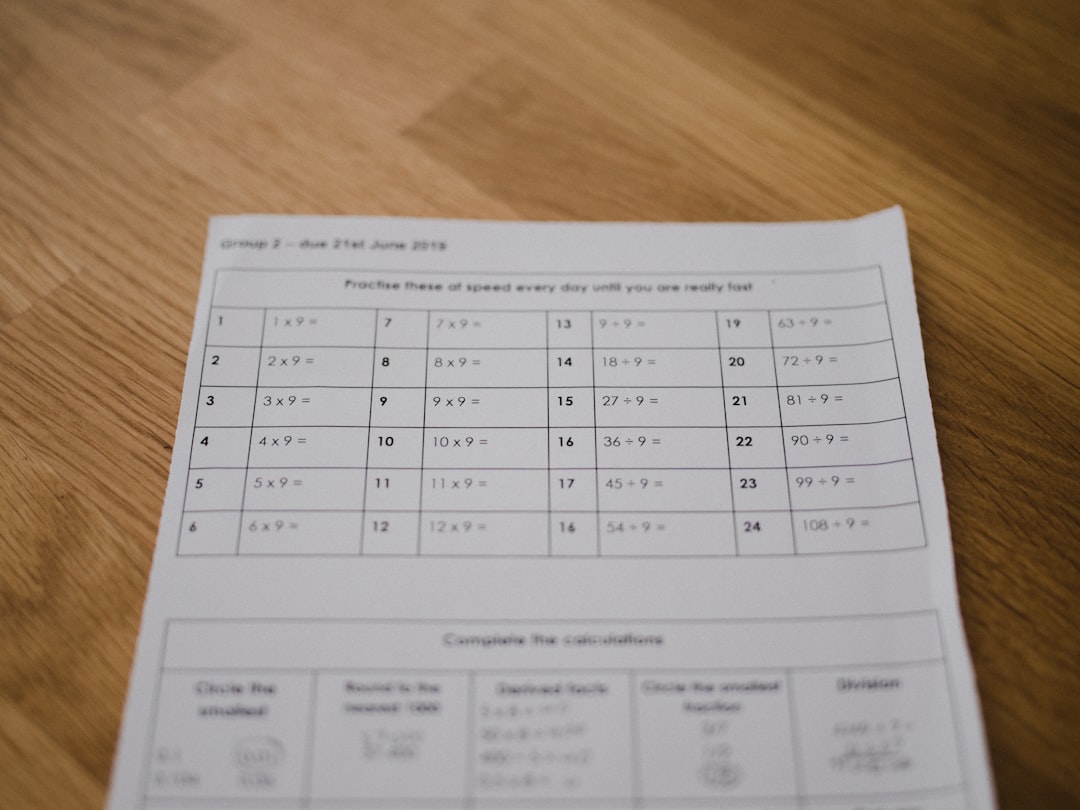
Math fill-in-the-blank questions often require numerical answers, formulas, or missing terms. They can be very effective in online quizzes because many platforms can automatically grade numbers.
- 8 × 7 = ______. Answer: 56
- The formula for the area of a rectangle is length × ______. Answer: width
- A right angle measures ______ degrees. Answer: 90
- The next number in the pattern 2, 4, 6, 8, ______ is 10. Answer: 10
- The value of x in x + 5 = 12 is ______. Answer: 7
For digital math quizzes, teachers should specify whether answers must include units. If the expected answer is 12 centimeters, the platform may need to accept 12 cm, 12 centimeters, and possibly 12, depending on the grading goal.
Examples for History and Social Studies
History and social studies questions often test names, places, documents, and events. Good fill-in-the-blank items should avoid obscure trivia unless the detail is central to the lesson.
- The first president of the United States was ______. Answer: George Washington
- The Declaration of Independence was adopted in the year ______. Answer: 1776
- Ancient Egypt developed along the ______ River. Answer: Nile
- A system in which citizens vote for leaders is called a ______. Answer: democracy
- The branch of government that makes laws is the ______ branch. Answer: legislative
These questions are most effective when paired with discussion, timelines, maps, or short-answer follow-ups. Fill-in-the-blank items can confirm knowledge, while other formats can assess deeper reasoning.
Tips for Online Fill-in-the-Blank Quizzes
Online quizzes add convenience but also introduce grading challenges. A student may know the answer but type it with a spelling variation, plural form, or extra space. Teachers should plan for these issues before publishing the quiz.
- Add accepted alternatives: Include common spellings, abbreviations, and synonyms when appropriate.
- Use case-insensitive grading: Answers such as Paris and paris should usually both be accepted.
- Provide instructions: Students should know whether to type one word, a number, or a complete phrase.
- Avoid too many blanks in one sentence: Multiple blanks can make automatic grading more difficult.
- Give feedback: A short explanation after submission helps students learn from mistakes.

A helpful feedback message might say: “The correct answer is photosynthesis. This is the process plants use to make food from sunlight, carbon dioxide, and water.” This transforms the quiz from a grading tool into a learning activity.
Common Mistakes to Avoid
Teachers should be careful not to remove key words that make the sentence impossible to understand. For example, “The ______ is important in science.” is too broad. Another common mistake is creating a blank for an unimportant word, such as an article or preposition. The blank should represent meaningful knowledge.
It is also best to avoid sentences copied directly from a textbook if the goal is genuine understanding. Students may memorize the phrase without understanding the concept. Reworded questions encourage learning rather than simple recognition.
FAQ
What is a fill-in-the-blank question?
A fill-in-the-blank question is an assessment item where a word, number, or phrase is removed from a sentence, and the student must supply the missing information.
Are fill-in-the-blank questions good for online quizzes?
Yes. They are useful for quick assessment and automatic grading, especially when answers are specific. Teachers should include acceptable answer variations to prevent unfair marking.
How many blanks should one question have?
In most cases, one blank is best. Two blanks may be acceptable, but too many blanks can confuse students and make grading less reliable.
What subjects work best with this question type?
Fill-in-the-blank questions work well in language arts, science, math, history, social studies, foreign languages, and professional training.
How can teachers make these questions more challenging?
Teachers can ask students to complete statements involving cause and effect, formulas, definitions, or concept application rather than asking only for memorized facts.